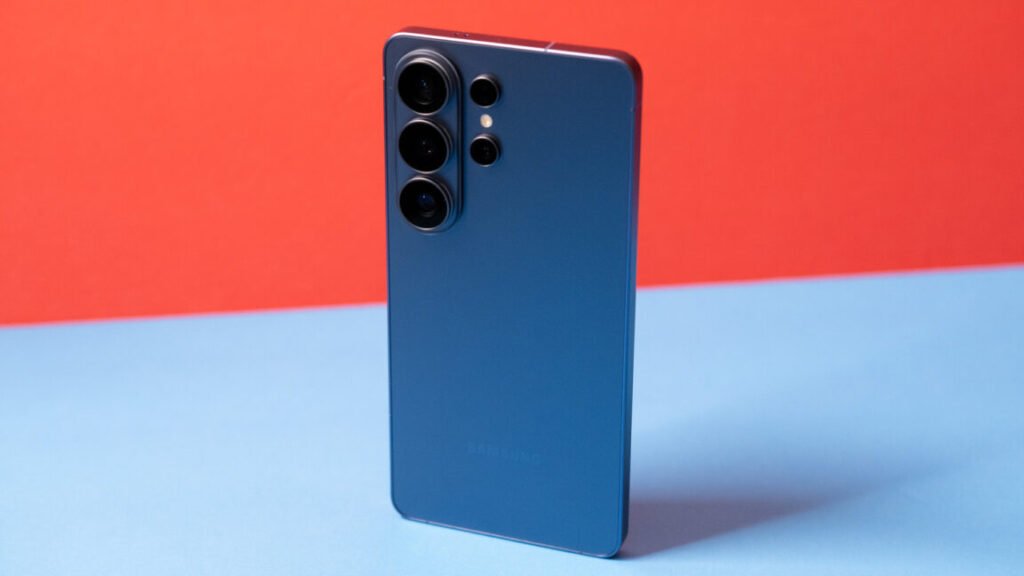

Samsung is nothing if not consistent. Like clockwork, we’ve got another Galaxy S lineup kicking off the year. The rumored lineup shakeup didn’t happen, so we’re looking at the same three tiers: the S26, S26 Plus, and the big daddy S26 Ultra.
At $1,300, the Ultra is a tough sell on paper. You can get a perfectly good phone for a third of that. But the Ultra has never been about value in the traditional sense. It’s about having everything, whether you need it or not.
And boy, does it have everything. The S26 Ultra is massive, powerful, and stuffed to the gills with features. Some of those features you’ll use daily. Others you’ll discover in Settings six months from now and wonder if you should care.
Let’s talk about the elephant in the room: AI. Every phone maker is shoving AI down our throats, and Samsung is no exception. But here’s the thing — they’re actually doing it right this time. The on-device AI processing is fast, and it’s genuinely private. No cloud uploads, no data mining. Your photos, notes, and voice memos stay on the phone.
Is it perfect? No. Samsung’s AI features still have that “tech demo” feel sometimes. But the privacy angle is a legit differentiator. Apple talks a big game about privacy, but Samsung is actually executing on it with on-device processing that doesn’t sacrifice performance.
The camera system is, as expected, excellent. The 200MP main sensor is overkill for most situations, but the computational photography does a great job of pixel-binning down to usable 12MP shots. Low-light performance is noticeably better than last year’s model. I’d still give the Pixel 16 the edge for pure point-and-shoot consistency, but Samsung is closing the gap.
Battery life is a mixed bag. The 5,000mAh battery is the same capacity as last year, and with the more power-efficient chipset, I’m getting through a full day with about 20% left. That’s good, but not great. Other flagships are pushing 5,500mAh or more. Samsung could have done better here.
Charging speeds remain a sore point. 45W wired charging is fine, but competitors are hitting 80W or even 100W. Samsung’s excuse about battery longevity doesn’t hold water when OnePlus and Xiaomi have figured it out. The 15W wireless charging is downright slow for 2026.
One UI 7 is actually… pleasant? I know, I’m as surprised as you are. Samsung has finally toned down the bloatware and the duplicate apps. The interface is clean, animations are smooth, and the customization options are genuinely useful. It’s still not stock Android, but it’s no longer an embarrassment.
The S Pen is back, and it’s still the best stylus experience on any phone. If you’re a note-taker or a doodler, there’s no substitute. But let’s be real: most people will use it twice and lose it in a drawer.
Here’s my biggest concern: at $1,300, you’re paying a premium for features you might not use. The AI stuff is cool, but is it $300 cooler than a Pixel 16 Pro? Probably not. The build quality is excellent, the display is gorgeous, and the performance is top-tier. But the law of diminishing returns is hitting hard in the flagship space.
Still, with other manufacturers cutting corners to keep prices down, the S26 Ultra might end up looking like decent value in a year. Samsung’s commitment to seven years of software updates is industry-leading, and the hardware is built to last.
Would I buy it? If money were no object, absolutely. It’s the most capable phone on the market. But if I were being practical, I’d save the $500 and get the S26 Plus. You lose the S Pen and the telephoto camera, but you keep 90% of the experience.
The Galaxy S26 Ultra is a fantastic phone for people who want everything. Just make sure you actually need everything before you pull the trigger.
Comments (0)
Login Log in to comment.
Be the first to comment!