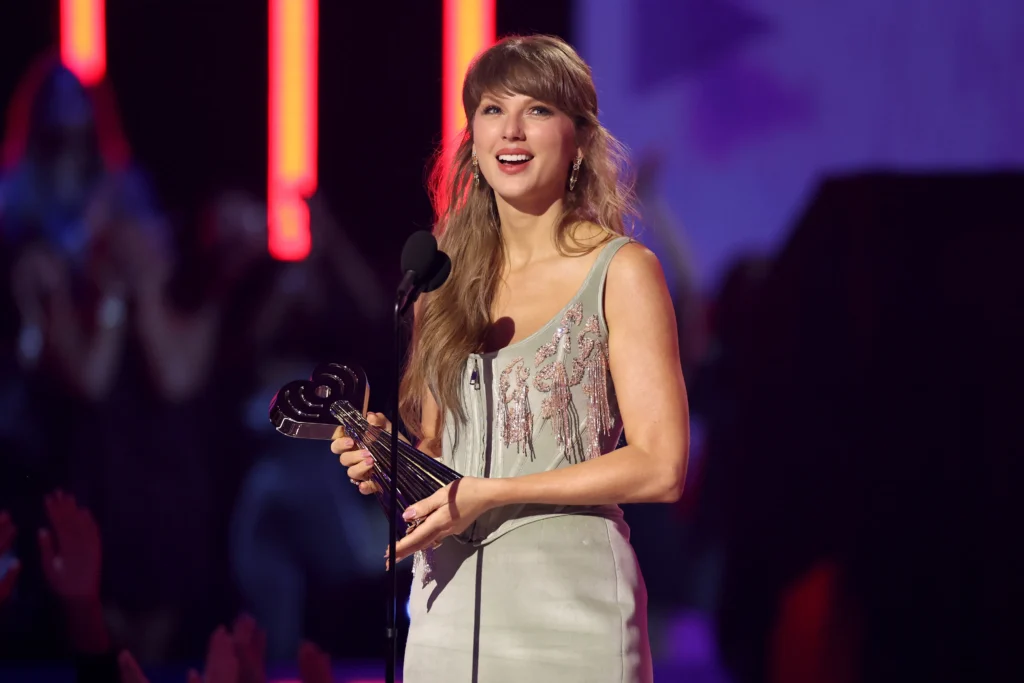

Taylor Swift has been dealing with AI impersonators for years now. Deepfakes, voice clones, the whole mess. She’s not the first celebrity to get hit by this stuff, but she might be the first to try something genuinely weird in response.
Her team just filed trademark applications for two phrases: “Hey, it’s Taylor Swift” and “Hey, it’s Taylor.” These aren’t new lyrics or lines from a song. They’re just… things she says. The filings include audio clips of her saying them during a promo for her latest album. The idea is to claim those specific spoken phrases as protected trademarks, so anyone generating an AI voice that mimics her saying those words would be violating her rights.
On paper, it’s clever. In practice, it’s a long shot.
Trademark law protects things that identify the source of goods or services. A brand name, a logo, a jingle. But a generic greeting like “Hey, it’s Taylor”? That’s not exactly Nike’s swoosh. The Patent and Trademark Office is going to ask: does this phrase actually function as a trademark, or is it just a thing people say when they answer the phone? The burden is on Swift’s team to prove that the public immediately associates those words with her and her alone, in a commercial context.
Maybe they can. She’s one of the most famous people on the planet. But the bar is high, and the AI angle makes it trickier. The real goal here isn’t to stop someone from saying “Hey, it’s Taylor” in conversation. It’s to create a legal weapon against AI-generated audio that uses her voice to scam fans or push fake endorsements. If the trademark goes through, Swift could sue anyone distributing AI content that includes those phrases, claiming trademark infringement.
That’s the theory, anyway. But AI-generated speech doesn’t fit neatly into existing IP frameworks. Copyright law barely covers voice likeness in most jurisdictions. Right of publicity varies wildly by state. Trademark might be the best tool available, but it’s a tool designed for a different problem.
I’ve seen this pattern before. Celebrities keep trying to use old laws to fight new tech, and the results are usually messy. Remember when a bunch of musicians sued an AI startup for using their voices without permission? Some cases settled, some dragged on, and the legal landscape is still a patchwork. Swift’s move is bolder than most, but it’s also more experimental.
The smart play here might be to push for federal legislation that explicitly protects voice and likeness from AI replication. A few states have started moving in that direction, but there’s no national standard yet. Until then, we’ll keep seeing these creative but fragile legal gambits.
I’m not saying Swift’s trademark application is doomed. It’s just that the system wasn’t built for this. And the AI train isn’t slowing down.
Comments (0)
Login Log in to comment.
Be the first to comment!