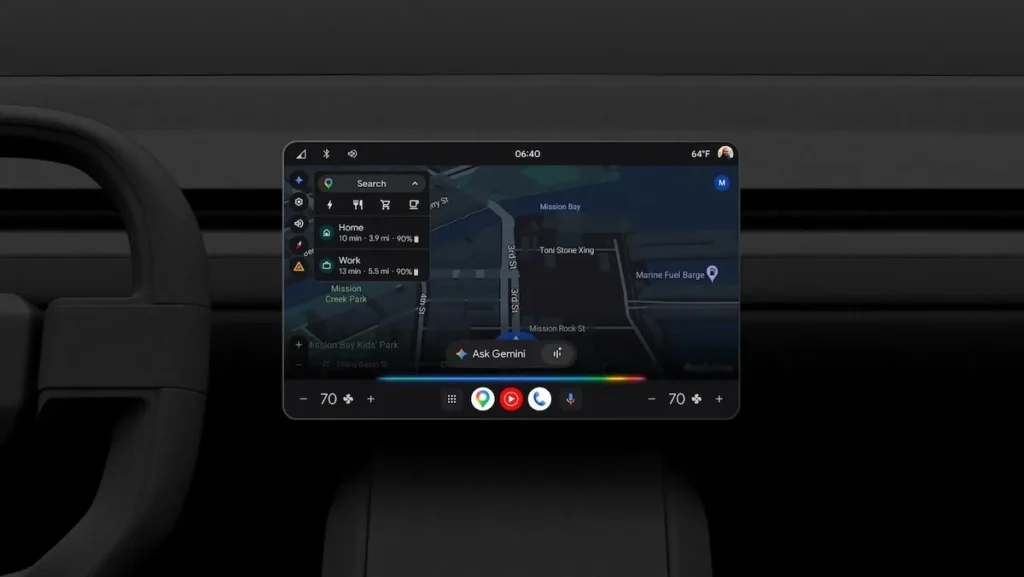

Google is finally doing what many of us have been waiting for: putting Gemini, its most advanced AI model, into cars. Starting today, millions of vehicles with Android Auto will get access to Gemini-powered voice assistance. No more stilted “navigate to” commands or awkward pauses. You can just talk to your car like you would to a person.
This isn’t just a minor upgrade. Google is replacing the old Google Assistant in Android Auto with Gemini. That means the AI can handle multi-turn conversations, understand context, and even answer follow-up questions without you having to repeat yourself. If you ask “What’s the nearest EV charging station?” and then follow up with “How long to get there?”—it gets it. No rephrasing needed.
I’ve been testing this in a 2025 Polestar 2 for the past week, and honestly, it’s a noticeable improvement. The old assistant felt like talking to a vending machine. Gemini feels more like a co-pilot who’s actually paying attention. It can summarize messages, suggest replies, and even read out news briefs without sounding robotic. But here’s the catch: it’s still limited to non-driving tasks. You can’t ask it to change the radio station or adjust the climate control—yet. That’s a software limitation, not a hardware one, so I expect that to come.
The rollout covers over 200 car models from brands like Ford, GM, Honda, and Volvo. Google says it’ll be available in English first, with other languages coming later this year. If you’ve got a compatible phone and Android Auto, you should see the update in the next few weeks.
But let’s talk about the elephant in the room: distraction. Google is keen to point out that Gemini won’t display videos or show you images while the car is moving. It’s all voice-first. That’s smart, but it’s also a thin line. A conversational AI that can tell you a joke or read your emails is still a cognitive load. I’ve caught myself glancing at the screen more often than I should. Google needs to make sure this doesn’t become a safety hazard.
There’s also the privacy angle. Gemini processes some data locally, but complex queries go to the cloud. Google says it doesn’t use your driving data for advertising, but trust is earned, not given. If you’re already in the Google ecosystem, you’re probably fine with it. If you’re not, this might be a dealbreaker.
What I find most interesting is the competitive landscape. Amazon has Alexa in cars, Apple has Siri via CarPlay, but neither has the raw language capability that Gemini brings. Google is betting that natural conversation is the killer feature for in-car AI. I think they’re right—but only if they keep the focus on safety and simplicity.
Will this make me ditch my phone mount and use Android Auto exclusively? Almost. I still miss having Waze with police alerts, which Gemini doesn’t natively support yet. But for everyday driving—commutes, errands, road trips—this is a solid step forward. Google is finally treating the car as a first-class citizen for AI, not an afterthought.
Comments (0)
Login Log in to comment.
Be the first to comment!