
Apple’s earnings calls usually have a predictable rhythm — iPhone dominates, Services hums along, and the Mac just kind of exists. But this quarter was different.
Wall Street pegged Mac revenue at somewhere in the low $8 billion range. Apple came back with $8.4 billion, a 6% year-over-year jump that caught pretty much everyone off guard. Total revenue hit $111.2 billion, up 17% from last year, but the Mac story is the one worth unpacking.
The obvious headline grabber is the MacBook Neo, those colorful machines that went on preorder March 4 and only shipped in volume mid-to-late March. So they were on sale for maybe two weeks during the quarter. Tim Cook called demand “off the charts” and said Apple set a record for new-to-Mac customers, partly because of the Neo.
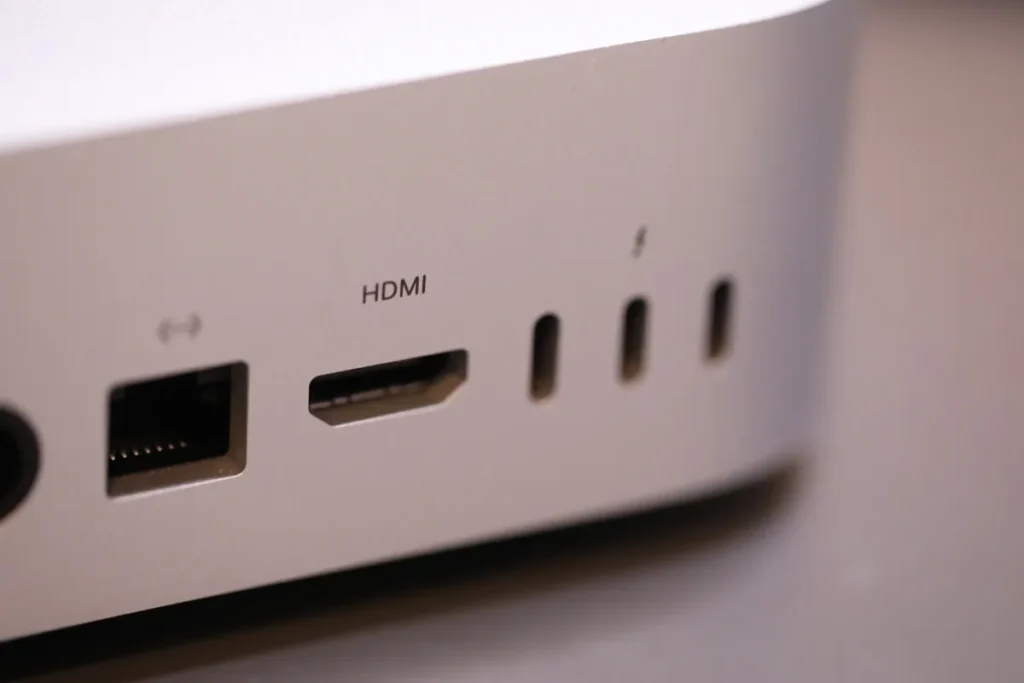
But here’s the part that actually surprised me: Cook explicitly credited local AI workloads for driving Mac sales. Specifically, he mentioned OpenClaw — the open-source AI framework that’s been taking China by storm — and said the Mac mini and Mac Studio have been selling out because developers and power users want to run AI models locally.
“Both of these are amazing platforms for AI and agentic tools, and the customer recognition of that is happening faster than what we had predicted,” Cook said on the earnings call. Translation: Apple didn’t see this coming.
The Mac mini is now the top-selling desktop in China, a market that’s been in an OpenClaw frenzy. That’s a big deal for a product line that usually plays second fiddle to the iPhone in that region.
Enterprise demand is also a factor. Apple name-dropped Perplexity as a company that’s standardized on Mac for building enterprise-grade AI assistants. Schools are even getting in on it — Kansas City Public Schools is apparently dropping Chromebooks for the MacBook Neo, which feels like a seismic shift in education IT.
But it’s not all smooth sailing. Mac revenue was flat quarter-over-quarter, which suggests this new demand hasn’t scaled yet. Cook admitted Apple is “supply constrained on the MacBook Neo” and said it could take “several months” to balance supply and demand for the Mac mini and Studio models.
“We’re not at the point where we’re saying this [constraint] is going to end anytime soon. And it’s not because of a problem, per se, other than we just under-called the demand,” Cook explained.
That’s a refreshingly honest take from a company that usually spins everything into a success story. They simply didn’t predict that developers and enterprises would flock to Macs for local AI workloads. And honestly, I’m not sure anyone else saw it coming either.
The Mac has always been a solid developer machine, but the M-series chips have quietly become surprisingly capable AI workhorses. Combined with the privacy and latency advantages of running models locally, it makes sense that power users are gravitating toward these devices.
Still, Apple needs to figure out production fast. If this trend continues, they’re leaving money on the table every day they can’t ship enough units. And in a market where competitors are falling over themselves to claim the AI PC mantle, Apple stumbled into this advantage by accident. Now they just need to capitalize on it before the momentum fades.
Comments (0)
Login Log in to comment.
Be the first to comment!