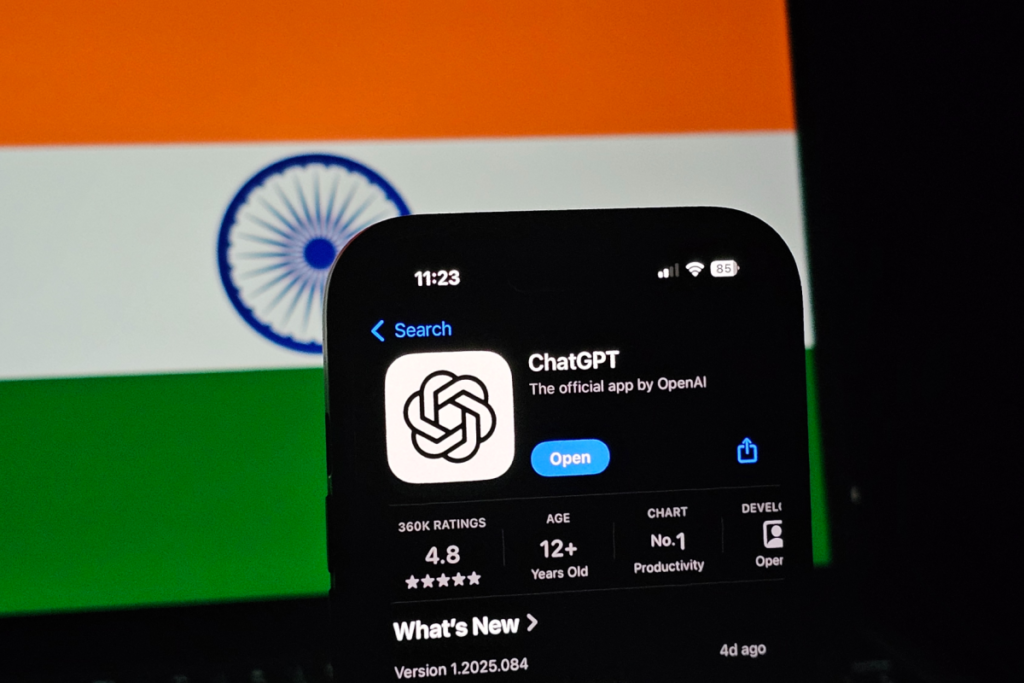

When OpenAI rolled out ChatGPT Images 2.0 a few months back, I figured it’d be another incremental update — better resolution, fewer weird hands, that sort of thing. But the data coming out of India tells a different story.
Users there are absolutely eating this thing up. Avatars, cinematic portraits, stylized selfies — the kind of stuff that normally lives in apps like Remini or Facetune. The numbers are staggering: India accounts for nearly 40% of all image generation requests on ChatGPT since the 2.0 launch. That’s not a rounding error.
Why India? It’s not just population size. The cultural appetite for personalized visuals runs deep there — think of the explosion of photo-editing apps over the last decade, or the way WhatsApp stickers became a full-blown subculture. People want to project themselves in creative, shareable formats, and ChatGPT Images 2.0 delivers that without needing a separate app or subscription.
The price point helps too. At $20/month for ChatGPT Plus, it’s still steep by Indian standards, but the free tier gives enough credits for a few high-quality generations per day. That’s enough to hook people. And once you’ve seen yourself as a Bollywood-style hero or a Mughal-era portrait, it’s hard to go back to plain old selfies.
But here’s the thing: outside India, the reception has been… lukewarm. In the US and Europe, usage is growing, but nowhere near the same velocity. I’ve seen the same complaints across Reddit and Twitter: “It’s fun for five minutes, then what?” “I don’t need another AI image tool.”
That skepticism makes sense. Western users have been bombarded with AI image generators for two years straight — DALL-E, Midjourney, Stable Diffusion, Adobe Firefly. The novelty is gone. ChatGPT Images 2.0 doesn’t do anything fundamentally new; it just does it a bit better and integrates it into a chat interface people already use.
In India, the landscape is different. Midjourney is expensive and requires Discord. DALL-E is buried inside ChatGPT anyway. Stable Diffusion requires technical know-how. So ChatGPT Images 2.0 lands as the first truly accessible, high-quality image generator for a massive audience that hasn’t been oversaturated yet.
There’s also a cultural angle I haven’t seen discussed much. The kinds of images Indians are generating lean heavily into personal identity — family portraits, festival greetings, wedding-related visuals. These are inherently social and shareable. Western usage, from what I’ve observed, trends more toward abstract art, memes, and experimental stuff. Different use cases, different stickiness.
OpenAI is clearly paying attention. They’ve started rolling out India-specific templates — think Diwali greetings, bridal wear, cricket-themed avatars. That kind of localization is smart, but it also highlights how generic the global rollout was. The product wasn’t designed for India; it just happened to fit a need there.
The bigger question is whether this regional success can translate elsewhere. I’m doubtful. The Western market is saturated, and the novelty window has closed. Unless OpenAI finds a genuinely new use case — something beyond “make me look cool” — I don’t see global adoption catching up to India’s numbers.
That said, India’s embrace is still a win. It proves that AI image generation has real consumer demand when the barriers are low enough. And it might push OpenAI to think harder about regional customization, which is something the entire industry has been bad at.
For now, ChatGPT Images 2.0 is a hit in one of the world’s biggest markets. That’s not nothing. But calling it a global success would be premature. The rest of the world is still waiting for a reason to care.
Comments (0)
Login Log in to comment.
Be the first to comment!