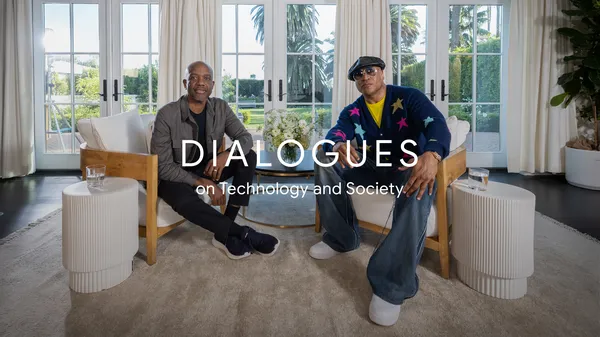

I’ve sat through enough tech-culture panels to develop a Pavlovian cringe response. But the latest episode of Google’s Dialogues on Technology and Society series caught my attention for one reason: LL COOL J.
Not just because he’s a hip-hop legend, but because he’s someone who has spent decades building a creative career from scratch. He knows what it takes to make something original. So when he sits down with James Manyika, Google’s SVP of Technology and Society, I figured there might actually be some substance here.
And I was right.
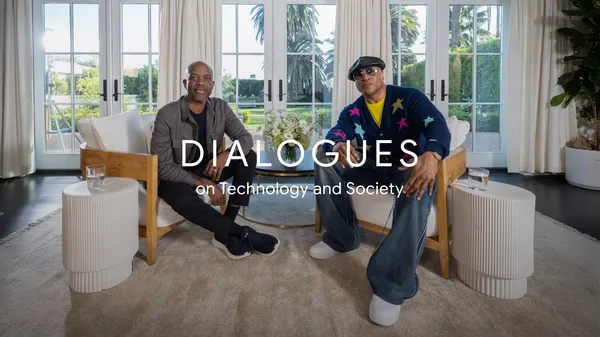
The Setup
The conversation covers the usual ground—generative AI, music production, the future of art—but what surprised me was how grounded it stayed. Manyika didn’t lean on the typical “AI will empower creators” platitudes. Instead, he acknowledged the tension head-on: tools that can mimic style, generate lyrics, and even produce full tracks are unnerving for anyone who has spent years honing their craft.
LL COOL J didn’t dismiss the tech either. He talked about using AI as a collaborator rather than a replacement, something I’ve been saying for a while but rarely hear from artists at his level. He compared it to sampling—controversial at first, then essential. The difference, he argued, is intent. If you’re using AI to shortcut genuine expression, it shows. If you’re using it to explore new territory, that’s different.
What Actually Stood Out
A few moments hit harder than I expected. When Manyika asked about the role of authenticity in an AI-augmented world, LL COOL J didn’t dodge. He talked about the emotional weight behind a performance—the breath, the hesitation, the imperfection. These are things AI can simulate but not inhabit. That distinction matters more than technical capability.
There was also a segment on cultural preservation. LL COOL J pointed out that AI could help archive and revive endangered languages and musical traditions. Not in a cheesy corporate-responsibility way, but as a practical tool for communities that are losing their heritage. I hadn’t thought of that angle, and it’s one of the more compelling use cases I’ve heard.
The Skeptic in Me
Look, I’m not naive. Google has a vested interest in making AI look friendly and creative. This is still a company that pushes AI tools into every corner of its ecosystem. But credit where it’s due: this wasn’t a sales pitch. Manyika asked real questions, and LL COOL J gave real answers. No scripted talking points, no forced optimism.
What I would have liked to see is more pushback on the economic side. How does a working musician compete when anyone can generate a passable track in seconds? The conversation touched on access and equity but didn’t go deep enough for my taste. Maybe that’s a topic for another episode.
Final Thoughts (Not the Wrap-Up Kind)
This is one of those rare tech-culture crossovers that doesn’t feel hollow. If you’re tired of AI conversations that sound like press releases, give it a watch. It’s short, it’s honest, and it might change how you think about the relationship between human creativity and machine assistance.
Or at least give you something to argue about at your next dinner party.
Comments (0)
Login Log in to comment.
Be the first to comment!