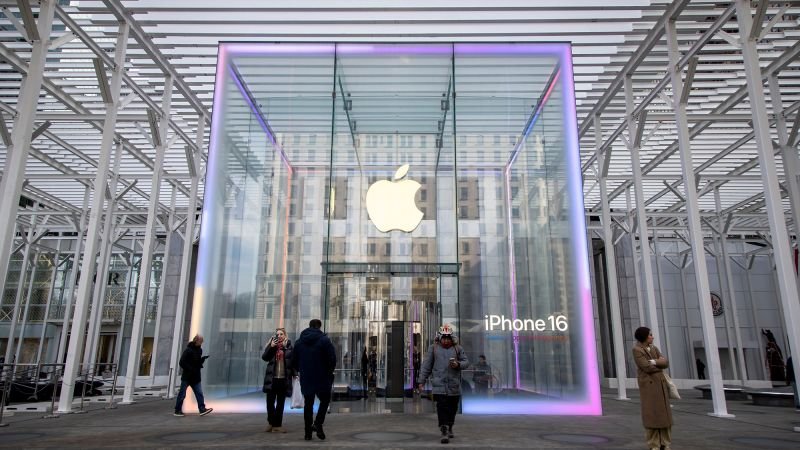

Apple has been taking heat lately for its AI rollout, and honestly, some of it is deserved. The company hyped up a new AI-powered Siri at WWDC last June, then quietly delayed it indefinitely. The features that did ship — like text message summaries — range from unhelpful to comically bad.
But here’s the thing: the criticism misses the point. Apple isn’t failing AI. AI is failing to be useful.
Let’s be real about why every tech company is scrambling to bolt AI onto their products. It’s not because users are demanding it. Last year, Apple had to pull an ad for its AI features because the backlash was so hostile. Customers aren’t asking for this. Wall Street is. Investors want that “super cycle” — a new feature so compelling that everyone rushes to upgrade their phone.
In its rush to please shareholders, Apple stumbled. And to its credit, the company seems to own it. They’ve said the delayed features will roll out “in the coming year.” But that cryptic delay only fuels the narrative that Apple is falling behind in the Most Important Tech Advancement Ever.
That’s where the story goes off the rails.
AI can’t fail, only be failed
There’s a popular saying in politics: “The party can never fail, it can only be failed.” It’s what ideologues say when voters reject their agenda — blame the voters, not the ideas.
The same fallacy is spreading among AI’s biggest cheerleaders. AI can never fail. It can only be failed. By you and me. By the smooth-brained Luddites who just don’t get it.
Tech columnists like Kevin Roose from the New York Times have suggested Apple failed AI, not the other way around. On his podcast Hard Fork, he said: “Apple is not meeting the moment in AI… when you’re building products with generative AI built into it, you do just need to be more comfortable with error, with mistakes, with things that are a little rough around the edges.”
To which I say: absolutely not.
Roose is right that Apple is famously obsessive about polish. That’s the company that built a $3 trillion empire on Steve Jobs’ mania for detail. Its “walled garden” iOS ecosystem — hated by developers, yes — is also why a billion people trust Apple with their faces, their bank accounts, their real-time locations.
Apple’s obsession with privacy and usability is why you can hand an iPhone to your Boomer parents and they’ll figure out FaceTime without a manual. That’s not a weakness. That’s the entire value proposition.
Roose argues that “there are people who use AI systems who know that they are not perfect” and that regular users understand there’s a right and wrong way to query a chatbot.
So the problem is… us? Because in addition to having jobs and lives and laundry to fold, we should also learn how to tiptoe around the limitations of large language models that may or may not tell us the truth?
Apple, Roose says, should keep pushing AI into its products and just accept that those features will be unpolished and too advanced for the average user.
To what end?
As Hard Fork co-host Casey Newton pointed out in that same episode, it’s not like Google or Amazon has figured out some incredible use case that makes people rush to buy a new Pixel or Echo.
“AI is still so much more of a science and research story than it is a product story,” Newton said.
Exactly. Large language models are fascinating science. They’re an academic wonder with real potential and some commercial successes — ChatGPT, Claude. But a bot that’s 80% accurate isn’t a product. It’s a demo.
And that’s fine. Not every breakthrough needs to be shoved into a shipping product immediately. Sometimes the right move is to wait until the technology actually works before asking a billion people to trust it with their data.
Apple’s sin, if you can call it that, is refusing to ship a half-baked product. That used to be called having standards. Now it’s called failing AI.
I know which one I prefer.
Comments (0)
Login Log in to comment.
Be the first to comment!