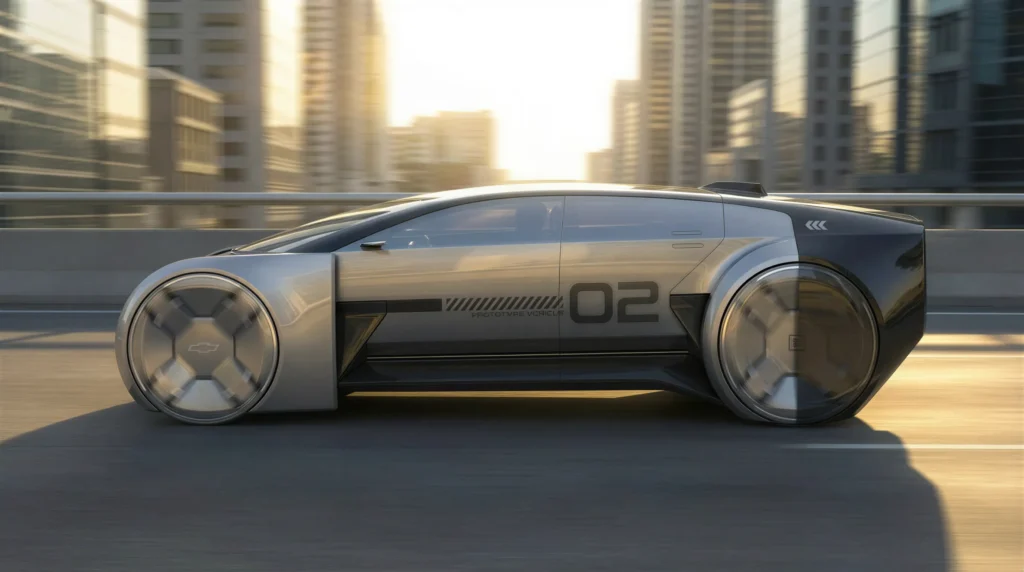

The car design world has been drowning in fancy tools for years. VR sculpting, real-time 3D visualization, you name it. But walk into any major automaker’s studio and the reality is still surprisingly analog: a designer hunched over a tablet with a stylus, sketching lines that will get endlessly revised before anyone even thinks about clay.
That sketch-to-production pipeline is brutally slow. Five years is considered fast. Which means the cars hitting dealerships this summer were first dreamed up in 2020 or 2021, back when the world looked very different. That’s not just a lag problem—it’s a risk problem. You’re committing to lines and proportions years before you know what the market will actually want.
Enter generative AI.
I’ve been skeptical of the “AI will design everything” hype for a while. Most early attempts were either gimmicky or produced shapes that looked like melted sneakers. But something shifted recently. The concepts coming out of places like Dongfeng and NIO actually look… coherent. Not derivative, not alien, just different in a way that feels intentional.
The trick, apparently, is not letting AI run wild. Instead, you feed it constraints: wheelbase, cabin volume, drag coefficient targets, brand identity cues. Then you let it generate hundreds of variations, most of which get trashed immediately. The designer becomes a curator, picking the interesting mutations and refining them. It’s more like breeding dogs than sculpting clay.
This approach has been tried before, but the compute wasn’t there. Now it is. The result is that the iterative loop that used to take weeks can happen in hours. And the AI doesn’t get tired or develop tunnel vision. It will happily explore the weird corner of design space a human would instinctively avoid.
Some of those weird corners are genuinely useful. I saw a concept where the side window line dips dramatically toward the rear, something a human designer might reject as too aggressive but actually improves rear visibility. Another had a front fascia that looked almost organic, with no obvious grille or headlight boundaries. It felt alive in a way most EV face-lifts don’t.
Does this mean human designers are obsolete? No, and anyone who says otherwise hasn’t watched what happens when you give an AI free rein. Without human guidance, the results are often technically correct but emotionally dead. Good car design has always been about proportion and emotion—things that are hard to encode in a loss function.
What’s really happening is a shift in the role. Designers spend less time drawing and more time directing. They’re training models, curating outputs, and making the final calls. The boring grunt work—re-rendering the same shape from 47 angles—gets automated. The creative high-level decisions stay human.
I’d still be cautious about the hype. The concepts shown so far are impressive, but production cars are a different beast. Crash safety, manufacturability, cost constraints—these all kill beautiful designs. The real test will be when an AI-assisted design actually rolls off the assembly line.
But for the first time, I’m not rolling my eyes at the idea. The AI-designed car is taking shape, and it doesn’t look like a gimmick. It looks like the next step.
Comments (0)
Login Log in to comment.
Be the first to comment!