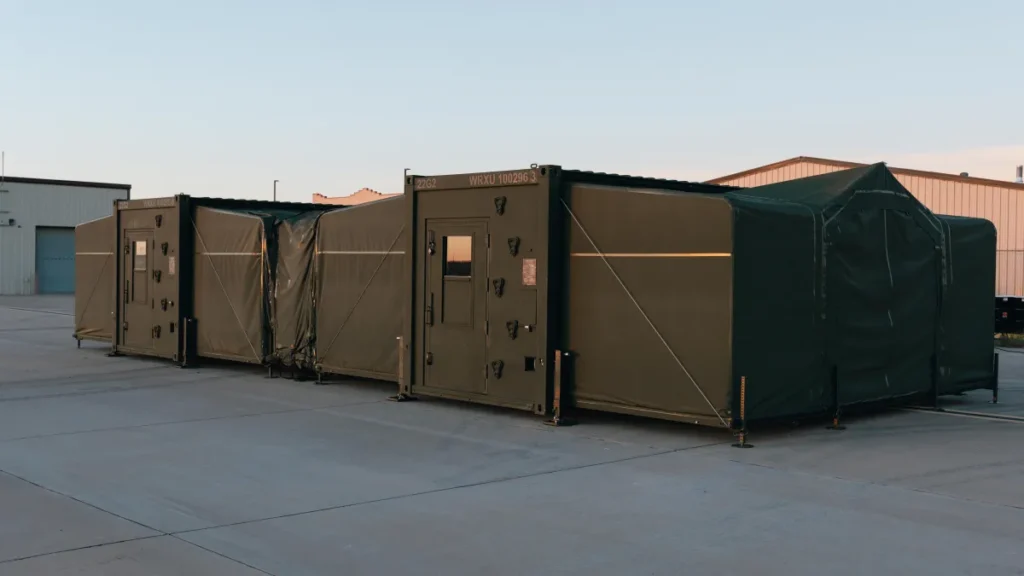

Firestorm Labs just closed an $82 million round to do something that sounds like sci-fi: pack an entire drone factory into a shipping container and drop it wherever troops need it.
This isn’t a concept video. The company has been quietly building modular manufacturing systems that fit inside standard intermodal containers — the same ones you see on cargo ships — and can be airlifted or trucked to forward operating bases. Once there, they churn out small unmanned aircraft systems (UAS) on demand.
I’ve been watching this space for a while, and the logic here is brutally simple. Right now, if a unit needs a new drone, you’re looking at weeks or months of supply chain: order from a factory stateside, wait for production, ship it across an ocean, then truck it to wherever it’s needed. By the time it arrives, the mission profile might have changed, or the enemy’s moved on. Firestorm wants to collapse that timeline to days.
The $82 million Series B was led by some familiar defense tech names — I won’t name-drop the whole cap table, but it includes a mix of traditional VC and strategic investors tied to the Pentagon. That mix matters because it signals both financial and operational buy-in.
Here’s what caught my attention: Firestorm isn’t just selling containers. They’re selling a whole ecosystem. The container factories come with digital twins, remote monitoring, and automated quality control. The idea is that a small team of operators — not engineers — can run the line. That’s a big deal when you’re short on skilled labor in a war zone.
Of course, the skeptic in me has questions. Containerized manufacturing has been tried before in other industries — pop-up vaccine plants, mobile 3D printing labs — and the results have been mixed. The constraints of a container (power, cooling, raw material supply, parts inventory) are real. Firestorm claims they’ve solved the thermal management and vibration issues, but I’ll believe the field data when I see it.
Still, the timing is right. The Pentagon has been pushing for “expeditionary manufacturing” for years, and the war in Ukraine proved that drones are consumables — you burn through them fast. Having the ability to print replacements on-site could be a genuine force multiplier.
What I’d really like to see is how they handle the software side. A factory isn’t just hardware; it needs a logistics backbone to track materials, manage production schedules, and sync with military supply systems. Firestorm hasn’t shared much about that, but it’s where the real complexity lives.
For now, the money is there, the concept is compelling, and the need is real. Whether the container factories actually deliver in the field is the only question that matters.
Comments (0)
Login Log in to comment.
Be the first to comment!